
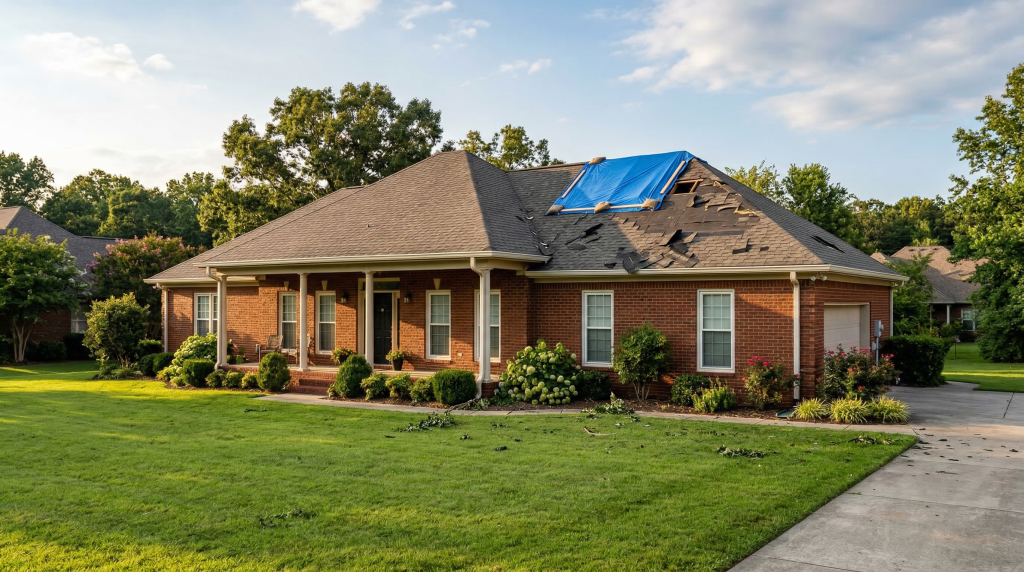
How Storm Damage Roof Insurance Works in Tennessee
Insurance covers sudden, accidental roof damage from hail, high winds, and fallen trees—not gradual wear or neglected maintenance. In South Central Tennessee, homeowners file more roof claims than any other property damage type, but getting full payout requires understanding exactly what your policy includes and how to document damage properly.
VolBuild’s roofing team has worked with hundreds of homeowners across Pulaski, Columbia, Lawrenceburg, Fayetteville, Lewisburg, and Ardmore since 2018. We’ve seen what gets claims approved and what gets them denied. Here’s what you need to know.
What Tennessee Roof Insurance Actually Covers
Standard homeowner policies in Tennessee pay for “sudden and accidental” damage. This means hail that cracks shingles, wind that lifts or tears them off, and tree limbs that puncture your roof deck during a storm. If water enters through that breach and damages your ceilings or walls, that’s typically covered too.
What insurance does not cover:
- Wear and tear: Shingles curling from age, granule loss over time, or rot from years of moisture exposure
- Poor maintenance: Clogged gutters causing water backup, or moss growth degrading shingles
- Cosmetic damage: Dents that don’t affect water-shedding ability (increasingly excluded in newer policies)
- Flooding: Rising water from creeks or overwhelmed drainage requires separate flood insurance
Winter storms add another layer. When ice or snow weight causes structural stress or collapse, that’s usually covered. But if your pipes freeze and burst because you didn’t maintain heat in the home, insurers often deny those claims for negligence.
The Real Cost: Depreciation and Deductibles Hit Hard
A common misconception: if your roof replacement costs $18,000, insurance pays $18,000. They don’t.
Most Tennessee policies use Actual Cash Value (ACV) or include recoverable depreciation clauses. Here’s a real example from a North Alabama claim:
| Cost Component | Amount |
|---|---|
| Full replacement cost | $18,000 |
| Less 70% depreciation (older roof) | -$12,600 |
| Less deductible | -$2,500 |
| Homeowner receives | $2,900 |
That leaves a $15,100 gap the homeowner must cover out-of-pocket. Some policies offer Replacement Cost Value (RCV) coverage, which pays full replacement minus deductible—but you’ll pay higher premiums, and insurers are tightening eligibility for older roofs.
If your roof is over 15-20 years old, many carriers now require inspections before renewal or switch you to ACV automatically. Check your declarations page now, not after the storm hits.
Filing Your Claim: Steps That Protect Your Payout
Document the Storm Event First
Before calling your insurer, verify the storm hit your area. The NOAA Storm Events Database tracks hail, wind, and tornado reports by county. Search Giles, Maury, Lawrence, Lincoln, or Marshall County for documented events—this creates an official record that strengthens your claim.
Get an Independent Inspection
Insurance adjusters work for the insurance company, not you. A professional roofing inspection from a licensed Tennessee contractor (TN License #72915) identifies damage the adjuster might miss: hail bruising on shingle mats, wind creases that break seals, or lifted flashing that creates leak points.
We document everything with photos, measurements, and repair estimates. This independent report gives you leverage if the initial adjuster’s assessment seems low.
File Within 48 Hours—But You Have Up to a Year
Tennessee law generally allows one year to file storm damage claims, but insurers increasingly require “prompt” reporting. Waiting weeks or months lets insurers argue damage worsened from neglect, or that another storm caused it. File fast, then negotiate the details.
Request a Second Adjuster if Denied
Claim denied or underpaid? You’re entitled to ask for a different adjuster or invoke appraisal clauses in your policy. Many homeowners accept the first offer and leave thousands on the table.
What Voids Your Coverage (Even If You Have It)
Insurers deny legitimate claims for preventable reasons. Avoid these mistakes:
- Unregistered contractor work: Tennessee requires roofing contractors to register with the state. Unregistered work can void manufacturer warranties and complicate insurance claims.
- Unauthorized repairs: Don’t let anyone start work before your adjuster inspects. Emergency tarping to prevent further damage is fine—full repairs are not.
- Pressure washing: Blasts granules off shingles and voids most manufacturer warranties. Clean roofs gently or not at all.
- No maintenance records: Can’t prove you cleaned gutters or replaced damaged shingles? Insurers may claim neglect contributed to the damage.
VolBuild’s Google Business Profile includes reviews from homeowners we’ve guided through this process—proper documentation makes the difference.
Storm Chaser Scams: The Door-to-Door Danger
After every major hail or wind event, out-of-state contractors flood Tennessee neighborhoods. They knock on doors, offer “free” inspections, and pressure homeowners to sign contracts on the spot.
The Tennessee Department of Commerce and Insurance warns: these operators often take insurance checks and disappear, do shoddy work that fails within months, or file fraudulent claims in your name.
Red flags:
– Soliciting door-to-door (legitimate contractors don’t need to)
– Demanding full payment upfront
– Offering to “handle everything” with your insurer—without you involved
– No physical local address or Tennessee contractor registration
VolBuild is based in Pulaski and Ardmore. We’ve been here since 2018, and we’ll be here when you need warranty service. Check VLB’s Google Business Profile for our North Alabama presence.
Proactive Steps: Before the Next Storm
Insurance gets harder to use every year. Deductibles rise, coverage narrows, and documentation requirements tighten. Protect yourself now:
Annual roof inspections: Catch minor issues before they become major damage. We inspect roofs across Columbia, Lawrenceburg, Fayetteville, and Lewisburg.
Policy review: Know your deductible, whether you have RCV or ACV coverage, and any cosmetic damage exclusions. Ask your agent about FORTIFIED roof upgrades—some insurers offer premium discounts for impact-resistant materials.
Pre-storm documentation: Photos of your roof’s current condition, dated, stored in cloud backup. After-storm comparison proves what changed.
Frequently Asked Questions
Does my warranty cover storm damage, or should I call insurance?
Call insurance first. Manufacturer warranties cover defects in materials and installation errors—not hail, wind, or falling trees. Insurance covers sudden storm events. Keep warranty documents handy though; if damage reveals an underlying defect, you may have dual coverage paths.
Will insurance replace my 25-year-old roof?
Possibly, but expect heavy depreciation deductions. Most carriers depreciate roofs over 15-20 years by 50-80%. Some non-renew policies on roofs over 20 years regardless of condition. If you’re approaching that age, budget for replacement or explore RCV policy upgrades before the next storm season.
How do I prove hail damage if I can’t see it from the ground?
You can’t—and insurers know this. Hail bruises (compressed shingle mats that crack over time) and wind creases (broken seals that let shingles flap) require close inspection. A licensed contractor uses chalk circles, photo documentation, and tactile testing. Professional inspection is essential; ground-level photos miss 90% of functional damage.
What if my neighbor got a new roof but my claim was denied?
Storm damage varies block by block, even house by house. Your neighbor may have steeper pitch (more direct hail impact), different shingle age/quality, or an adjuster who identified damage yours missed. Request a second inspection, hire an independent adjuster, or invoke appraisal rights. Don’t accept denial without challenge.
Does insurance cover tree removal if a tree falls but misses my house?
Generally no—unless the tree damages an insured structure. If it lands in your yard, removal is your cost. If it hits your roof, fence, or shed, removal of the portion affecting that structure is typically covered. Some policies offer limited debris removal endorsements; check yours.
Storm damage claims in Tennessee aren’t simple, but they’re winnable with preparation and the right partner. We’ve guided homeowners through hundreds of them since 2018.
Get a free estimate and honest assessment of your roof’s condition at volbuild.com/contact-us/. Whether you need emergency tarping, a full inspection for your insurance claim, or just want to know where you stand before the next storm, we’re here to help.