
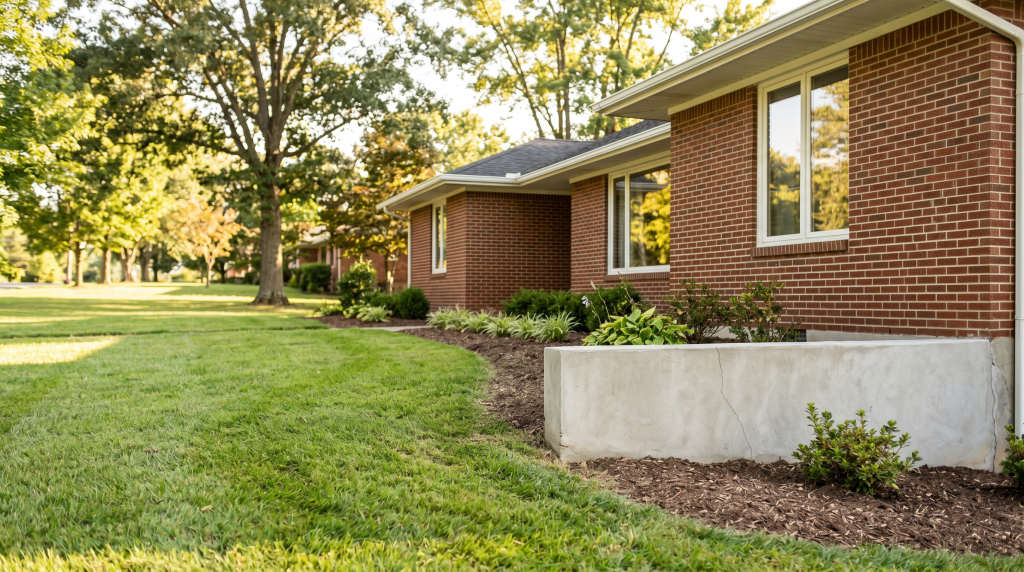
Small, hairline cracks in drywall or concrete are often just normal house settling, but stair-step cracks in brick or cracks that widen over time signal structural foundation movement. In South Central Tennessee and North Alabama, our clay-heavy soil is the primary culprit, expanding and shrinking with every seasonal rain cycle.
If you are seeing signs of movement, you need to determine if you are dealing with minor cosmetic issues or a foundation that requires professional intervention.
Normal Settling vs. Structural Foundation Cracks
Every home settles to some degree. As the materials dry out and the weight of the structure presses down on the soil, you might see small, thin cracks in the basement or around door frames. These are usually harmless.
Structural foundation cracks are different. They indicate that the foundation itself is shifting, sinking, or heaving. You should look for:
* Stair-step cracks: These appear in brick or concrete block walls, following the mortar lines in a diagonal pattern.
* Widening gaps: If a crack is wider than a nickel or continues to grow over several months, it is not just “settling.”
* Horizontal cracks: These are a major red flag. They often mean the soil outside is exerting too much pressure against your foundation wall, causing it to bow inward.
If you are concerned about the integrity of your home, you can request a consultation with our team to evaluate the specific patterns in your home.
Why Soil in Tennessee and Alabama Causes Movement
The soil in our region is notorious for its high clay content. Clay is “expansive,” meaning it swells significantly when it gets wet and shrinks when it dries out.
Because we experience heavy spring rains followed by hot, dry summers, the soil under your home is constantly moving. This creates a “see-saw” effect. If your home’s drainage isn’t directing water away from the foundation, that clay-rich soil becomes saturated, softens, and loses its ability to support the weight of the structure. Conversely, during a drought, the soil shrinks away from the footings, leaving your home without proper support.
Common Warning Signs of Foundation Issues
You don’t always need to be in the crawlspace to know there is a problem. Your home will often tell you through its finishes and fixtures. Watch for these indicators:
- Sticking doors and windows: If a door that worked fine last month suddenly scrapes the frame or won’t latch, your house frame is likely shifting.
- Sloping or uneven floors: If you can roll a marble across the floor or feel a noticeable dip when you walk, the foundation is likely moving unevenly.
- Gaps at the trim: Look for separation between the crown molding and the ceiling or between baseboards and the floor.
- Exterior brick movement: Stair-step cracking on the outside of your home is one of the most reliable indicators of differential settlement.
The Role of Drainage and Trees
Many foundation issues we see in South Central Tennessee and North Alabama are exacerbated by two factors: poor drainage and large trees.
If your gutters are clogged or your downspouts empty directly against your foundation, you are essentially pumping water into the soil that supports your house. Similarly, large trees near the structure draw massive amounts of moisture from the ground, drying out the soil unevenly and causing one side of the house to sink faster than the other. Proper gutter management is often the first line of defense in preventing further foundation damage.
When to Call a Professional
If you notice a crack, don’t panic, but don’t ignore it. Start by marking the end of the crack with a pencil and dating it. If the crack grows past your mark in a few months, or if you notice any of the “red flag” symptoms mentioned above, it is time to have a professional inspect the site. We provide honest assessments based on over 100+ home builds and foundation projects. We won’t sell you a repair you don’t need, but we will tell you if your home’s structural integrity is at risk.
FAQ: Foundation Cracks vs. Settling
How do I know if a crack is structural or cosmetic?
Cosmetic cracks are usually hairline fractures in drywall or plaster that appear after a home is first built. Structural cracks are typically wider, deeper, and often follow a stair-step pattern in brick or concrete block. If a crack is diagonal, widening, or accompanied by sticking doors, it is likely structural.
Are cracks in a new house normal settling?
Yes, minor cracks in new construction are common as the building materials “cure” and the soil compresses under the new weight. However, these should be small and stable. If they continue to widen after the first year, you should have a professional look at the soil compaction and drainage.
Can settling foundations be repaired?
Yes, foundations can be stabilized. Depending on the cause, solutions might include installing steel piers to reach stable soil, improving exterior drainage, or adjusting the grade around the home to move water away from the foundation.
Does clay soil cause foundation problems?
Absolutely. The clay-rich soil prevalent in Tennessee and Alabama is highly expansive. It swells when wet and shrinks when dry, which creates pressure changes that can cause foundations to shift, heave, or settle unevenly.
When should I worry about cracks in brick walls?
You should worry if the cracks are diagonal, stair-stepping, or if they appear suddenly after heavy rain. If you can see light through the crack or if it is wide enough to fit a coin, it is time to call a professional for an inspection.
Need an expert opinion on your home’s foundation?
We serve homeowners across Pulaski, Columbia, Lawrenceburg, Fayetteville, and the surrounding areas. We’ll tell you exactly what we see and what, if anything, needs to be done.
VolBuild LLC | TN License #72915